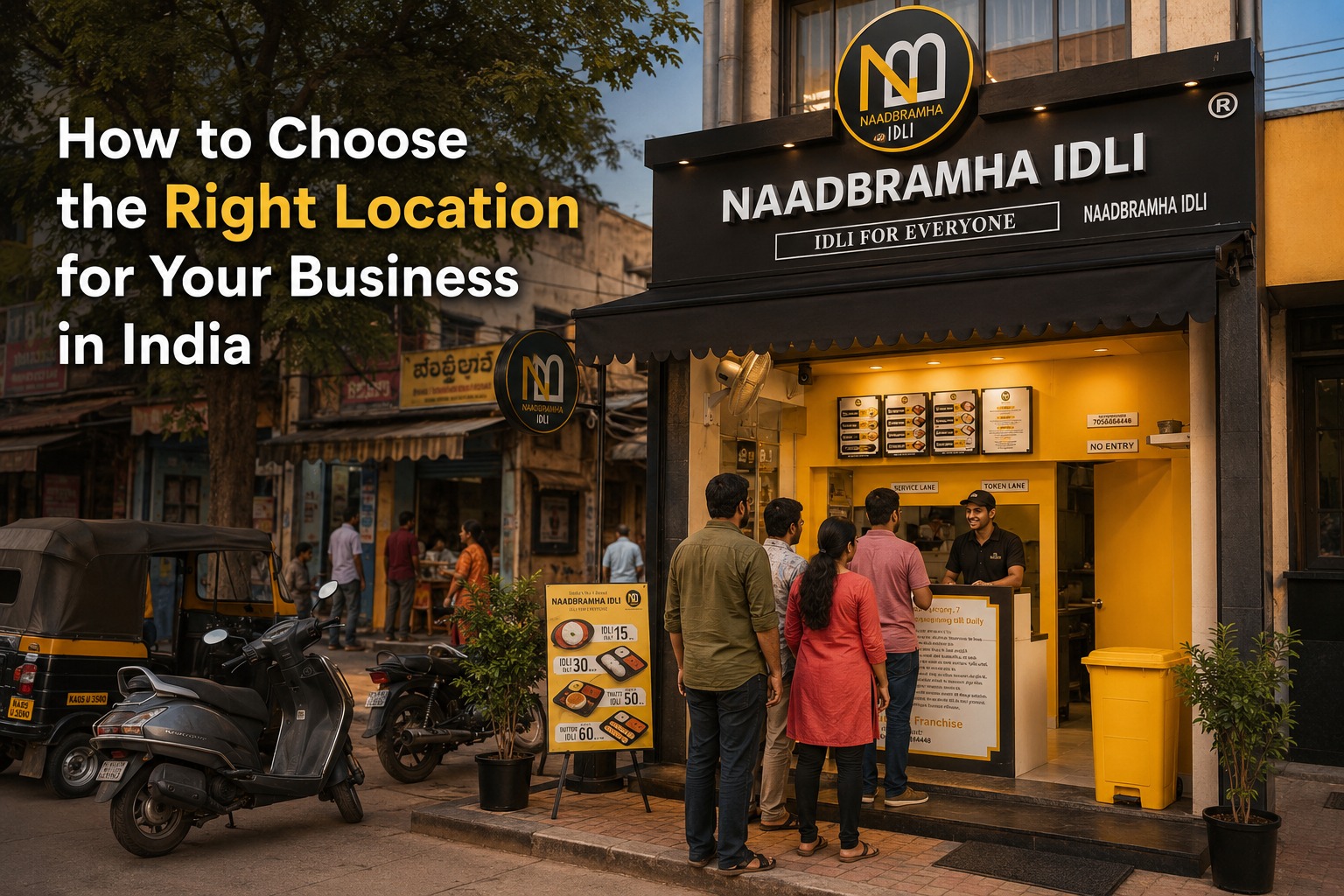
In India, your location is your most powerful business decision. The right spot brings customers to you automatically. The wrong one makes you fight for every sale - no matter how good your food is.
India's food services industry is projected to reach Rs. 7.76 lakh crore by 2028, and the mistakes that cause 60% of new restaurants to close within the first year almost always start with a poor location decision.
Here is everything you need to know before signing a lease.
1. Know Your Customer Before You Pick a Location
The right question is not "where is the cheapest rent?" It is "where does my customer already go?"
Match your format to the right zone:
QSR or Food Franchise - malls, metro stations, railway stations, busy high streets, and highways. You need volume, so footfall is everything.
Café or Dessert Outlet - college zones, IT parks, and upmarket residential areas. Young professionals and students drive this business daily.
Casual Dining or Family Restaurant - established residential neighbourhoods with middle to upper-middle-class families. Weekend dining is your biggest revenue driver.
Cloud Kitchen - physical visibility matters less. Stay within 3 to 5 km of dense residential or office areas to keep Zomato and Swiggy delivery times competitive.
In India, urban hotspots like Mumbai and Bengaluru attract youthful corporate crowds with higher spending power, while suburban areas prefer family-friendly and budget-friendly restaurants. Your location must align with your brand identity from day one.
2. Tier 1, Tier 2, or Tier 3 City-Choose Wisely
Tier 1 cities like Mumbai, Delhi, Bengaluru, and Pune offer high footfall and strong brand visibility - but rent is expensive and competition is fierce.
Tier 2 cities like Jaipur, Indore, Lucknow, and Nagpur are where the real food business opportunity lies in 2026. Tier 2 and Tier 3 cities offer lower rents with equally hungry customers, and the dine-in franchise model achieves the highest annual ROI of up to 26% in these locations.
If you are starting your first food business with limited capital, a Tier 2 city gives you lower risk, lower rent, and more budget to invest in food quality and local marketing - the things that actually build loyalty.
3. Study Footfall Yourself-Never Trust a Broker
Footfall is oxygen for any food business. Without it, you starve.
Around 60% of restaurant revenue in India comes from malls, metros, airports, and shopping complexes. High-traffic areas draw more spontaneous visits - but they come at a premium price.
Visit your shortlisted location at different times - weekday lunch, weekday evening, Saturday afternoon, and Sunday. Count foot traffic. Watch whether nearby food outlets are busy. Look for anchor footfall drivers nearby - a cinema, ATM, supermarket, college, or local market all signal consistent daily traffic.
Never rely on what a landlord or broker tells you. Go and observe it yourself.
4. Keep Rent Within the Safe Zone
Rent kills more food businesses in India than bad food does.
Rent should ideally remain within 8 to 12 percent of projected monthly revenue. Selecting the wrong location can make even a well-designed restaurant financially very difficult to sustain.
Typical monthly rents in 2026 are Rs. 15,000 to 40,000 for Tier 2 cities, Rs. 40,000 to 1,50,000 for Tier 1 metros, and Rs. 80,000 to 3,00,000 for premium high-street locations.
Always negotiate. Ask for 1 to 3 months rent-free during setup. Lock in a fixed annual escalation of around 5%. Get a mutual lock-in clause so you cannot be suddenly evicted after spending on renovation.
5. Visibility-If They Cannot See You, They Will Not Come
In India, visible equals profitable - especially for food. Ground floor with road-facing access is the gold standard for any walk-in food business. A well-lit signboard visible from a distance is one of your cheapest and most effective marketing tools.
Also check parking and delivery access. If customers struggle to park and riders struggle to pick up orders, you will lose both walk-in and delivery revenue before you even get started.
6. Competition Nearby Is Not Always Bad
Many first-time food owners avoid areas with existing competition. This is often the wrong instinct.
For QSRs, opening near a busy street with many food outlets can actually yield more profit - when people are already in a food-browsing mindset, they are open to trying something new nearby.
Food clusters work brilliantly in India. Malls, restaurant streets, and market food zones pull customers specifically to eat - and being part of that cluster gives you built-in traffic no marketing budget can easily replicate.
7. Check Basic Infrastructure
Even a perfect location fails without reliable basics. Before finalising any food business location in India, check:
Power supply - frequent cuts are a serious problem for kitchens. Confirm generator backup availability.
Water supply - critical for cooking, cleaning, and hygiene compliance.
Kitchen ventilation - many Indian commercial properties lack adequate exhaust for heavy cooking. Confirm this before committing.
Internet connectivity - your POS, UPI payments, delivery apps, and inventory management all depend on it.
Delivery access - can riders reach your entrance easily without blocking traffic?
8. Sort Your Licences Before You Sign
Licence delays are one of the most common reasons food businesses in India miss their launch date - and lose weeks of revenue in the process.
Opening a restaurant in India requires 8 to 12 licences. Apply in sequence starting 3 to 4 months before your planned opening date to avoid delays that can push your launch by weeks.
Key licences: FSSAI food licence, trade licence, GST registration, fire safety NOC, shop and establishment registration, and health or eating house permit. Before signing, speak to existing business owners in that area and ask honestly how the local licensing process went for them.
9. Think Delivery-Even for Dine-In
In 2026, no food business in India can afford to ignore Zomato and Swiggy.
Food delivery accounts for almost 30% of overall restaurant revenues in India, with food-related online payments crossing Rs. 1.9 lakh crore within just six months in 2025.
When evaluating any location, open the delivery apps and check what restaurants are already listed nearby, their ratings, and delivery times. If strong competitors dominate the delivery radius, factor that seriously into your revenue projections.
10. ValidateBefore You Commit Fully
Before signing a long-term lease and spending on renovation, test your location assumption with low risk.
Run a weekend pop-up or food stall in the area. Test delivery potential from a temporary kitchen. Talk to nearby shopkeepers - not just food businesses, but any retailer. Ask them honestly whether footfall is growing or declining.
Use foot-traffic analysis, demographic research, and local insights before making a final decision, and look for venues that support future scalability - letting you expand seating or replicate the model across multiple outlets when the time comes.
Only after validating real demand should you commit to a full lease, renovation spend, and equipment investment.
Quick Location Checklist for Food Businesses
- Does the location match where your target customer eats, lives, or works?
- Have you personally visited at different times to check real footfall?
- Is rent within 8 to 12% of your projected monthly revenue?
- Is the outlet ground floor and road-facing for maximum visibility?
- Is parking and delivery rider access easy?
- Have you checked and confirmed all licences are obtainable without delays?
- Is the location within a strong Zomato and Swiggy delivery radius?
- Have you spoken to existing nearby business owners about their experience?
- Have you done a low-risk test to validate demand before committing?
Final Thoughts
The right location works for your food business every single day - bringing in customers, supporting delivery revenue, and helping you reach profitability faster than any marketing campaign ever could.
Take the time. Visit in person. Study the numbers. Talk to real people. And when you find the right spot - move fast. In India's booming food market, the best locations do not stay available for long.
Leave a comment
Your email address will not be published. Required fields are marked *